European nettle tree
Celtis australis
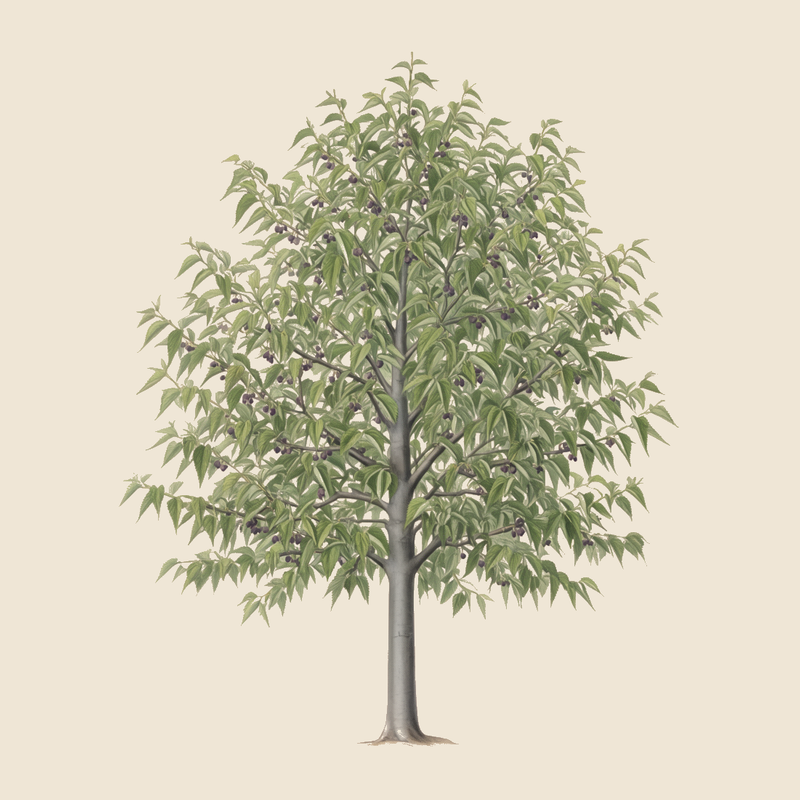
A tough, long-lived shade anchor with sweet edible berries once mature — a dependable canopy backbone for hot dry climates. Deep roots, so keep it clear of paving and drains.
European nettle tree in a syntropic line
European nettle tree belongs in the High layer as a Climax species. Main production and shade trees for the line. Rough in-row spacing starts around 5.4 m in a syntropic row. Good line partners include Butterfly bush, Common sage. As a Climax species it is meant to stay for the long term — protect its light and root space as pioneers fade.
Tolerances and growing conditions
- Strata
- High
- Lifecycle
- Climax
- Soil preference
- Loam, Sandy, Rocky
- Soil pH range
- 6 – 8.5
- Min. temperature
- -15°C
- Min. rainfall
- 450 mm/year
- Wind tolerance
- High
- Frost tolerance
- High
- Growth rate
- Medium
- Irrigation needed
- Low
- Foliage
- Deciduous
- Waterlogging tolerance
- Low
- Origin
- Mediterranean
- Native to Portugal
- No
How to manage it
Long-lived drought-hardy shade and street tree with edible drupes; lift the canopy for understory cropping and let it run for decades.
How to propagate
Sow fresh seed in autumn; stratification helps but not essential. Slow to establish.
Guidance, not a guarantee — success varies by species and skill.
What to watch out for
Deep vigorous roots - keep away from paving and drains. Slow to establish and slow to first fruit; not a short-term producer.
Frequently asked questions about European nettle tree
Is european nettle tree frost-hardy?
Yes for winter cold in many climates — generally hardy to around -15°C when dormant, with high frost tolerance in the catalog. Flowering crops can still lose a season to late frost, so site them carefully.
What soil does european nettle tree need?
It does best on loam, sandy, rocky ground, at pH about 6–8.5.
How much water does european nettle tree need?
Plan for a rainfall floor around 450 mm/year, plus low irrigation once established.
Can european nettle tree handle wet or waterlogged soil?
Poorly — european nettle tree has low waterlogging tolerance, so keep it off winter-wet clay and standing water.
What should I watch out for with european nettle tree?
Deep vigorous roots - keep away from paving and drains. Slow to establish and slow to first fruit; not a short-term producer.
European nettle tree in soil templates
- European nettle tree appears in the sandy soil starter lineBrowse sandy templates →
- European nettle tree appears in the loam soil starter lineBrowse loam templates →
- European nettle tree appears in the clay soil starter lineBrowse clay templates →
- European nettle tree appears in the chalky soil starter lineBrowse chalky templates →
Design your line to see how your land fits European nettle tree.
Start designing your line →