Fig
Ficus carica
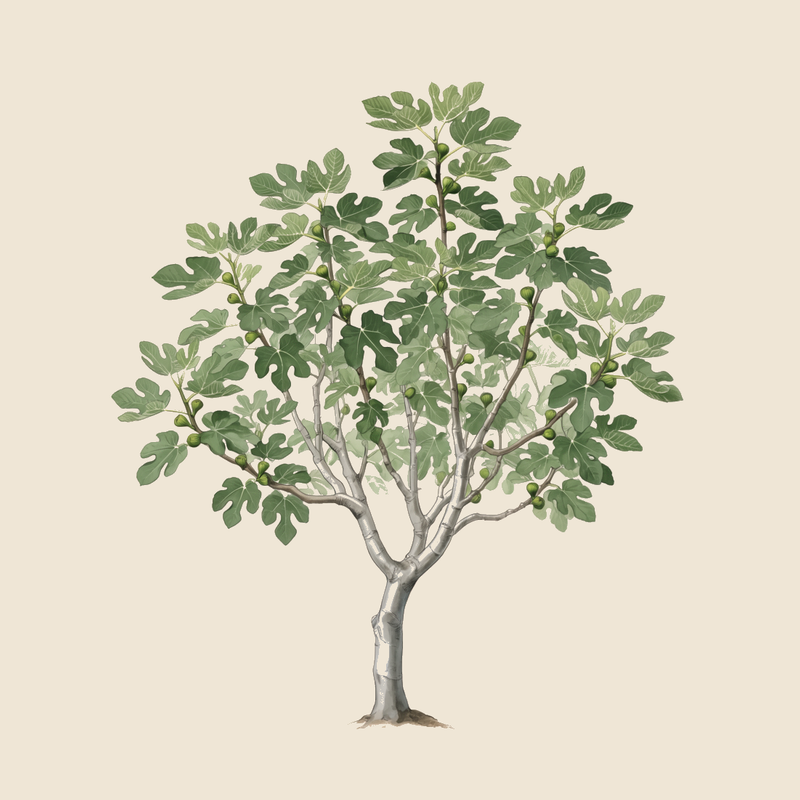
A drought-proof classic that crops sweet figs on almost no care and pollards happily for size. Its roots seek water aggressively, so keep it clear of drains and walls.
Fig in a syntropic line
Fig is a Medium-layer Secondary producer that thrives in the humid, sheltered pocket under emergents. Pair it with shrub nitrogen-fixers and ground-cover mulch plants; prune for renewal wood and expect it to hold yield while climax trees slowly claim the upper light.
Tolerances and growing conditions
- Strata
- Medium
- Lifecycle
- Secondary
- Soil preference
- Loam, Sandy, Rocky
- Soil pH range
- 6 – 7.8
- Min. temperature
- -12°C
- Min. rainfall
- 450 mm/year
- Wind tolerance
- Medium
- Frost tolerance
- Medium
- Growth rate
- Fast
- Irrigation needed
- High
- Foliage
- Deciduous
- Waterlogging tolerance
- Low
- Origin
- Mediterranean
- Native to Portugal
- No
How to manage it
Very drought-hardy once established; prune in winter and it resprouts strongly, tolerating hard pollarding. Restrict roots or grow in poor soil to boost fruiting over foliage.
How to prune
Remove dead, crossing, and overly dense inner branches to open the canopy; head back overly long shoots to shape a low, multi-stem vase. Figs tolerate hard cuts and resprout fast, but avoid cutting when severe frost is forecast right after.
How to propagate
Hardwood cuttings root in weeks; seed also germinates readily — fig is one of the easiest fruit trees to start.
Guidance, not a guarantee — success varies by species and skill.
What to watch out for
Roots are aggressive and water-seeking - keep away from drains, paving and walls. Choose self-fertile (common/Adriatic) cultivars; caprifig types need the fig wasp to set fruit. Sap is a skin irritant and phototoxic in sunlight.
Frequently asked questions about Fig
Is fig frost-hardy?
Yes for winter cold in many climates — generally hardy to around -12°C when dormant, with medium frost tolerance in the catalog. Flowering crops can still lose a season to late frost, so site them carefully.
What soil does fig need?
It does best on loam, sandy, rocky ground, at pH about 6–7.8.
How much water does fig need?
Plan for a rainfall floor around 450 mm/year, plus high irrigation once established.
Can fig handle wet or waterlogged soil?
Poorly — fig has low waterlogging tolerance, so keep it off winter-wet clay and standing water.
What should I watch out for with fig?
Roots are aggressive and water-seeking - keep away from drains, paving and walls. Choose self-fertile (common/Adriatic) cultivars; caprifig types need the fig wasp to set fruit. Sap is a skin irritant and phototoxic in sunlight.
Fig in soil templates
Design your line to see how your land fits Fig.
Start designing your line →