Hyssop
Hyssopus officinalis
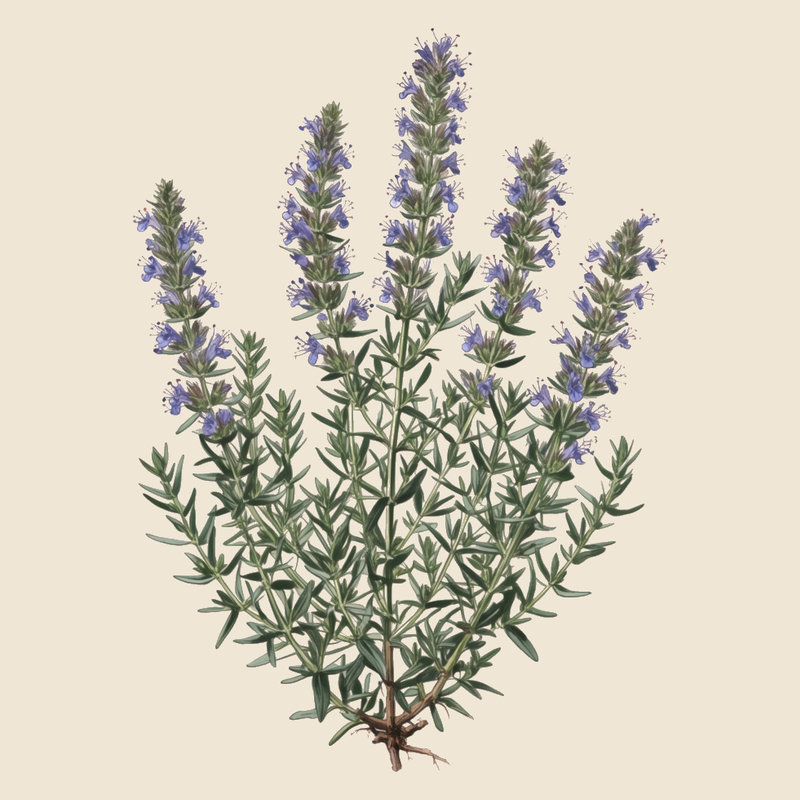
A tidy, aromatic little workhorse for hot dry edges: strong bee and pollinator draw plus a steady culinary harvest. Give it sun and drainage — it sulks and rots in damp soil.
Hyssop in a syntropic line
Hyssop belongs in the Ground cover layer as a Secondary species. Aim for 2–4 species for resilient, continuous cover. Rough in-row spacing starts around 0.3 m in a syntropic row. Good line partners include Bladder senna, Butterfly bush. As a Secondary species it carries mid-term yield and structure while climax trees slowly claim the canopy.
Tolerances and growing conditions
- Strata
- Ground cover
- Lifecycle
- Secondary
- Soil preference
- Rocky, Sandy
- Soil pH range
- 6 – 8
- Min. temperature
- -20°C
- Min. rainfall
- 350 mm/year
- Wind tolerance
- High
- Frost tolerance
- High
- Growth rate
- Medium
- Irrigation needed
- Low
- Foliage
- Evergreen
- Waterlogging tolerance
- Low
- Origin
- Mediterranean
- Native to Portugal
- Yes
How to manage it
Evergreen culinary ground cover for hot, dry edges; trim after flowering to keep it compact and prevent legginess.
How to propagate
Softwood cuttings in spring or seed both root and germinate readily.
Guidance, not a guarantee — success varies by species and skill.
What to watch out for
Goes woody and sparse with age; dislikes wet feet and needs sharp drainage.
Frequently asked questions about Hyssop
Is hyssop frost-hardy?
Yes for winter cold in many climates — generally hardy to around -20°C when dormant, with high frost tolerance in the catalog. Flowering crops can still lose a season to late frost, so site them carefully.
What soil does hyssop need?
It does best on rocky, sandy ground, at pH about 6–8.
How much water does hyssop need?
Plan for a rainfall floor around 350 mm/year, plus low irrigation once established.
Can hyssop handle wet or waterlogged soil?
Poorly — hyssop has low waterlogging tolerance, so keep it off winter-wet clay and standing water.
What should I watch out for with hyssop?
Goes woody and sparse with age; dislikes wet feet and needs sharp drainage.
Design your line to see how your land fits Hyssop.
Start designing your line →