Olive
Olea europaea
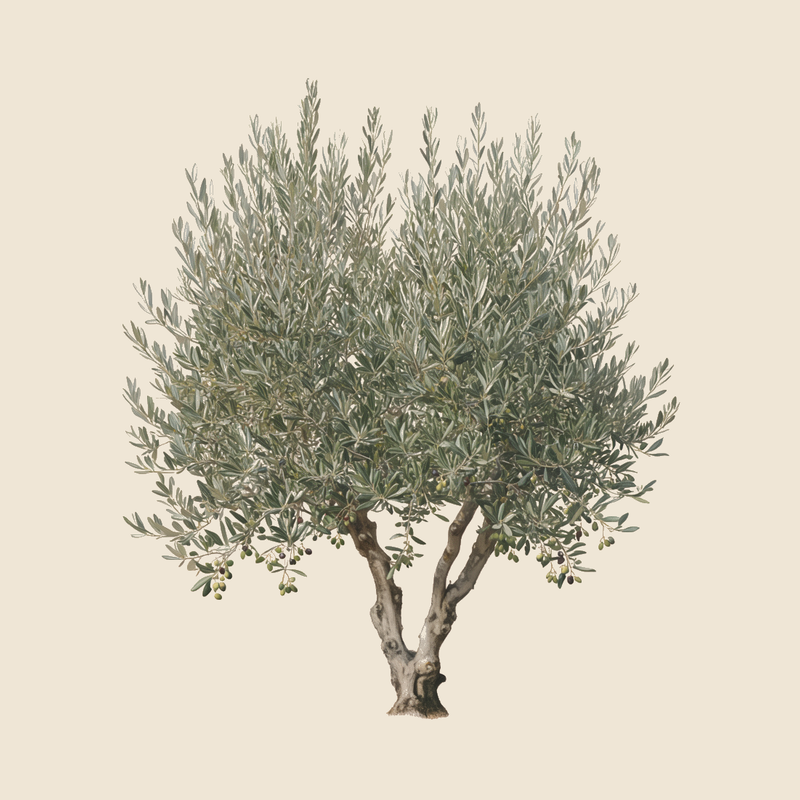
The icon: a near-immortal, drought-proof tree for oil and fruit that thrives on heat and neglect. Slow to mature and shy to crop some years, but it will outlive you.
Olive in a syntropic line
Olive is a long-lived High-layer Climax producer for dry Mediterranean lines. Pair it with drought-tolerant emergents (stone pine, holm oak) and shrub nitrogen-fixers on the edges. Space generously so its evergreen canopy does not smother medium fruit trees as the system closes.
Tolerances and growing conditions
- Strata
- High
- Lifecycle
- Climax
- Soil preference
- Rocky, Loam, Sandy
- Soil pH range
- 5.5 – 8.5
- Min. temperature
- -10°C
- Min. rainfall
- 350 mm/year
- Wind tolerance
- High
- Frost tolerance
- Medium
- Growth rate
- Slow
- Irrigation needed
- Low
- Foliage
- Evergreen
- Waterlogging tolerance
- Low
- Origin
- Mediterranean
- Native to Portugal
- Yes
How to manage it
Open-vase prune annually for light and airflow; resprouts strongly from the base and stump if cut hard, so old trees can be rejuvenated.
How to prune
Shape into an open vase with 3-4 main limbs, removing suckers, dead wood and inward-crossing branches for airflow. Wait until frost risk has passed before cutting, since fresh wounds are vulnerable to cold; old trees tolerate hard renewal cuts if needed.
How to propagate
Hardwood truncheons root slowly; named fruiting cultivars are grafted onto wild rootstock.
Guidance, not a guarantee — success varies by species and skill.
What to watch out for
Very slow to bear a full crop and prone to biennial cropping; pollen is a significant allergen and fruit is inedible until cured.
Frequently asked questions about Olive
Is olive frost-hardy?
Yes for winter cold in many climates — generally hardy to around -10°C when dormant, with medium frost tolerance in the catalog. Flowering crops can still lose a season to late frost, so site them carefully.
What soil does olive need?
It does best on rocky, loam, sandy ground, at pH about 5.5–8.5.
How much water does olive need?
Plan for a rainfall floor around 350 mm/year, plus low irrigation once established.
Can olive handle wet or waterlogged soil?
Poorly — olive has low waterlogging tolerance, so keep it off winter-wet clay and standing water.
What should I watch out for with olive?
Very slow to bear a full crop and prone to biennial cropping; pollen is a significant allergen and fruit is inedible until cured.
Olive in soil templates
Design your line to see how your land fits Olive.
Start designing your line →