Persimmon
Diospyros kaki
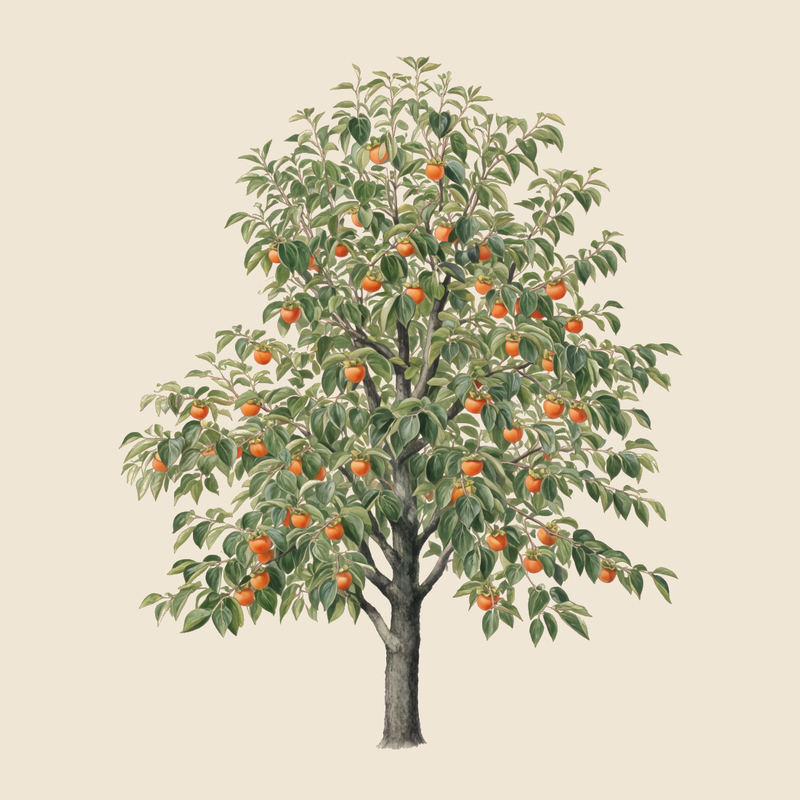
Named kaki cultivars are grafted onto seedling rootstock — they crop heavily and glow orange in autumn. Brittle branches snap under heavy fruit load, so thin them.
Persimmon in a syntropic line
Persimmon belongs in the Medium layer as a Secondary productive species. The productive heart — most of your yield lives here. Rough in-row spacing starts around 5 m in a syntropic row. Good line partners include Black locust, False indigo bush. As a Secondary species it carries mid-term yield and structure while climax trees slowly claim the canopy.
Tolerances and growing conditions
- Strata
- Medium
- Lifecycle
- Secondary
- Soil preference
- Loam, Sandy
- Soil pH range
- 6 – 7.5
- Min. temperature
- -15°C
- Min. rainfall
- 700 mm/year
- Wind tolerance
- Low
- Frost tolerance
- Medium
- Growth rate
- Medium
- Irrigation needed
- Medium
- Foliage
- Deciduous
- Waterlogging tolerance
- Low
- Origin
- East Asia
- Native to Portugal
- No
How to manage it
Fairly hardy fruit tree that crops heavily; many cultivars are self-fertile. Thin fruit and stake young branches to prevent snapping.
How to prune
Winter pruning is fine and useful for persimmon. Remove crossing, drooping, or overly dense branches and build an open-centre or modified leader shape with well-spaced scaffolds strong enough to hold heavy fruit. Avoid heavy cuts into old wood; stake weak young limbs instead.
How to propagate
Named kaki cultivars are grafted onto seedling rootstock; seed gives variable wild-type fruit.
Guidance, not a guarantee — success varies by species and skill.
What to watch out for
Astringent cultivars (most) must be fully soft/bletted before eating or they're unpleasantly puckering. Branches are brittle and can snap under heavy fruit load - thin or support them.
Frequently asked questions about Persimmon
Is persimmon frost-hardy?
Yes for winter cold in many climates — generally hardy to around -15°C when dormant, with medium frost tolerance in the catalog. Flowering crops can still lose a season to late frost, so site them carefully.
What soil does persimmon need?
It does best on loam, sandy ground, at pH about 6–7.5.
How much water does persimmon need?
Plan for a rainfall floor around 700 mm/year, plus medium irrigation once established.
Can persimmon handle wet or waterlogged soil?
Poorly — persimmon has low waterlogging tolerance, so keep it off winter-wet clay and standing water.
What should I watch out for with persimmon?
Astringent cultivars (most) must be fully soft/bletted before eating or they're unpleasantly puckering. Branches are brittle and can snap under heavy fruit load - thin or support them.
Persimmon in soil templates
Design your line to see how your land fits Persimmon.
Start designing your line →