Prickly pear
Opuntia ficus-indica
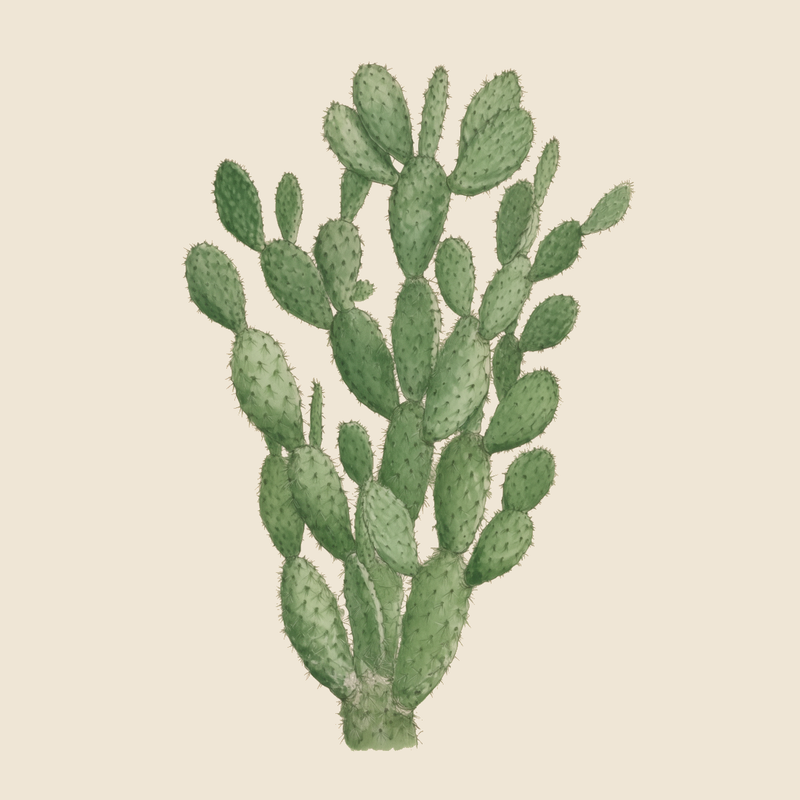
A near-indestructible cactus that shrugs off drought and poor soil, giving fruit, edible pads and a spiny living fence. Handle with tongs, not hands — and check it isn't invasive locally.
Prickly pear in a syntropic line
Prickly pear belongs in the Shrub layer as a Secondary productive species. Support species, fruit, and nitrogen fixers under the canopy. Rough in-row spacing starts around 2.2 m in a syntropic row. Good line partners include Casuarina, Leucaena. As a Secondary species it carries mid-term yield and structure while climax trees slowly claim the canopy.
Tolerances and growing conditions
- Strata
- Shrub
- Lifecycle
- Secondary
- Soil preference
- Sandy, Rocky
- Soil pH range
- 6 – 8
- Min. temperature
- -8°C
- Min. rainfall
- 150 mm/year
- Wind tolerance
- High
- Frost tolerance
- Medium
- Growth rate
- Fast
- Irrigation needed
- Low
- Foliage
- Evergreen
- Waterlogging tolerance
- Low
- Origin
- Mexico
- Native to Portugal
- No
How to manage it
Near-indestructible cactus grown for fruit and edible pads, and used as a living fence; detached pads root readily when planted. Remove old pads to control spread and thin dense clumps for easier fruit access.
How to prune
Prickly pear needs almost no winter cutting; only remove damaged or overcrowded pads to open access and control spread. Cut cleanly at pad joints, let cuts callus before handling, and avoid piling wounded pads where they'll root unwanted. Shape lightly for a manageable clumping hedge rather than a tree form.
How to propagate
Snap off a pad, let it callus for a week, then push into dry soil.
Guidance, not a guarantee — success varies by species and skill.
What to watch out for
Spines plus tiny barbed glochids make handling hazardous — always use tongs and gloves. Classed as invasive in many Mediterranean, African and Australian regions; confirm it's legal to plant before establishing.
Frequently asked questions about Prickly pear
Is prickly pear frost-hardy?
Yes for winter cold in many climates — generally hardy to around -8°C when dormant, with medium frost tolerance in the catalog. Flowering crops can still lose a season to late frost, so site them carefully.
What soil does prickly pear need?
It does best on sandy, rocky ground, at pH about 6–8.
How much water does prickly pear need?
Plan for a rainfall floor around 150 mm/year, plus low irrigation once established.
Can prickly pear handle wet or waterlogged soil?
Poorly — prickly pear has low waterlogging tolerance, so keep it off winter-wet clay and standing water.
What should I watch out for with prickly pear?
Spines plus tiny barbed glochids make handling hazardous — always use tongs and gloves. Classed as invasive in many Mediterranean, African and Australian regions; confirm it's legal to plant before establishing.
Prickly pear in soil templates
Design your line to see how your land fits Prickly pear.
Start designing your line →