Sweet chestnut
Castanea sativa
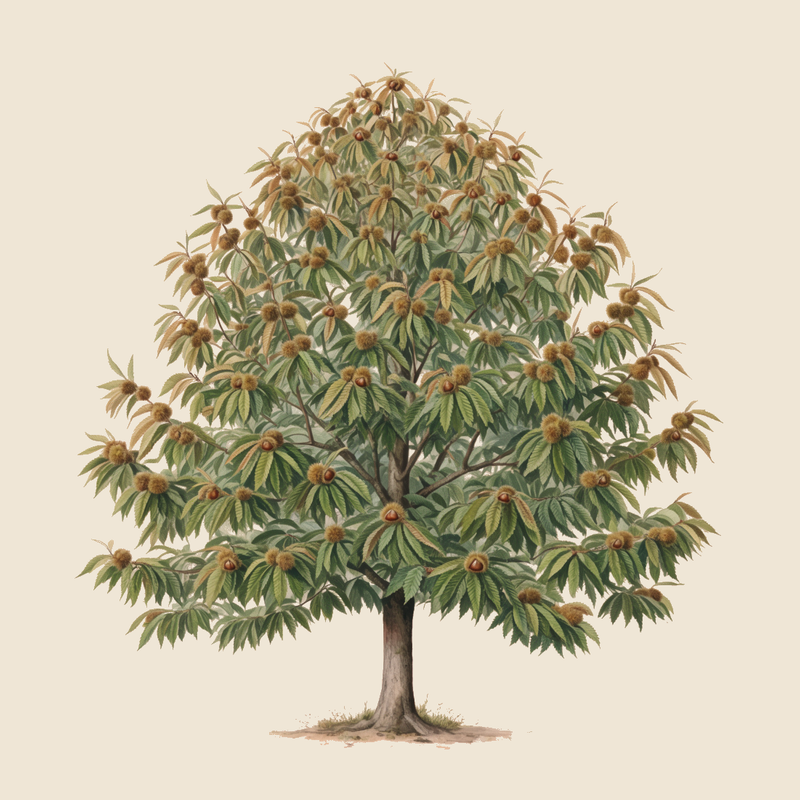
A dual-purpose giant — chestnuts from the mature tree, durable poles from the coppice. It demands acidic, well-drained soil though, and will sulk or die on limestone.
Sweet chestnut in a syntropic line
Sweet chestnut is a High-layer biomass-and-production tree for cooler, moisture-retentive loams. Use it as a productive scaffold with nitrogen-fixing understory shrubs; thin crowded stems so medium crops still see enough light as the chestnut crowns expand.
Tolerances and growing conditions
- Strata
- High
- Lifecycle
- Climax
- Soil preference
- Sandy, Loam
- Soil pH range
- 4.5 – 6.5
- Min. temperature
- -25°C
- Min. rainfall
- 700 mm/year
- Wind tolerance
- Medium
- Frost tolerance
- High
- Growth rate
- Medium
- Irrigation needed
- Medium
- Foliage
- Deciduous
- Waterlogging tolerance
- Low
- Origin
- Mediterranean
- Native to Portugal
- Yes
How to manage it
Superb dual-purpose nut and coppice tree — coppices vigorously for durable poles and firewood while mature standards crop nuts; thin regrowth to a few strong stems.
How to prune
Winter suits structural work on chestnut. On young standards remove competing leaders, crossing branches, and low sprouts to build one dominant trunk with a lifted canopy; on coppice stools cut back to a few strong, well-spaced shoots. Don't over-thin bearing wood.
How to propagate
Sow fresh seed in autumn or layer low branches; seedlings variable — graft for a named variety.
Guidance, not a guarantee — success varies by species and skill.
What to watch out for
Needs acidic, well-drained soil and fails on chalk or heavy clay. Needs cross-pollination (plant 2+ trees). Watch for chestnut blight and ink disease.
Frequently asked questions about Sweet chestnut
Is sweet chestnut frost-hardy?
Yes for winter cold in many climates — generally hardy to around -25°C when dormant, with high frost tolerance in the catalog. Flowering crops can still lose a season to late frost, so site them carefully.
What soil does sweet chestnut need?
It does best on sandy, loam ground, at pH about 4.5–6.5.
How much water does sweet chestnut need?
Plan for a rainfall floor around 700 mm/year, plus medium irrigation once established.
Can sweet chestnut handle wet or waterlogged soil?
Poorly — sweet chestnut has low waterlogging tolerance, so keep it off winter-wet clay and standing water.
What should I watch out for with sweet chestnut?
Needs acidic, well-drained soil and fails on chalk or heavy clay. Needs cross-pollination (plant 2+ trees). Watch for chestnut blight and ink disease.
Sweet chestnut in soil templates
Design your line to see how your land fits Sweet chestnut.
Start designing your line →