Almond-leaved pear
Pyrus spinosa
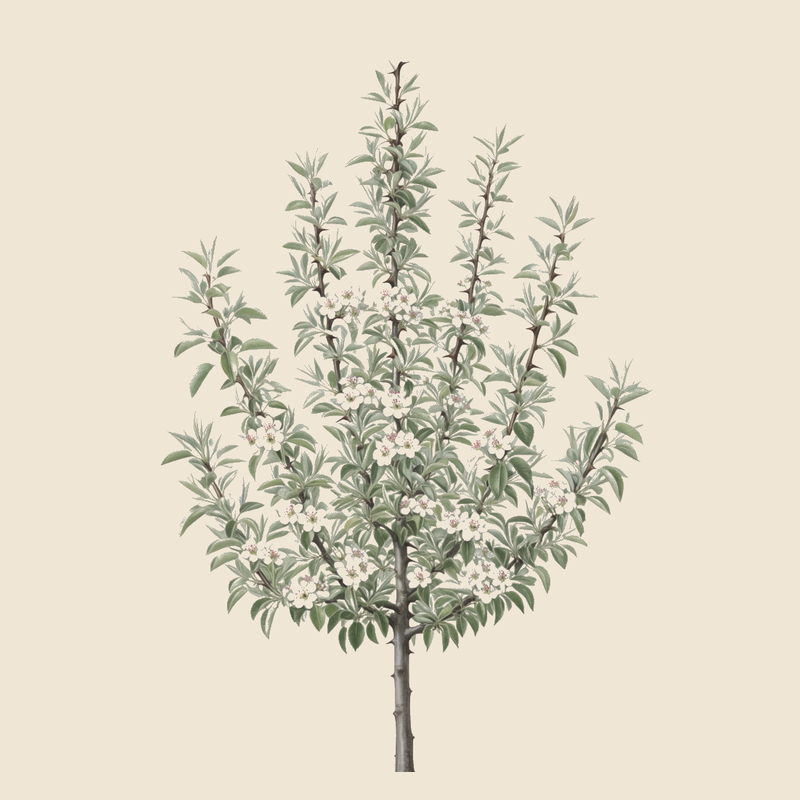
A thorny, drought-proof wild pear for wildlife fruit and pear rootstock — it thrives where orchard pears would fail. Slow and small-fruited, but bomb-proof.
Almond-leaved pear in a syntropic line
Almond-leaved pear belongs in the Medium layer as a Secondary productive species. The productive heart — most of your yield lives here. Rough in-row spacing starts around 5 m in a syntropic row. Good line partners include Leucaena, Tree medick. As a Secondary species it carries mid-term yield and structure while climax trees slowly claim the canopy.
Tolerances and growing conditions
- Strata
- Medium
- Lifecycle
- Secondary
- Soil preference
- Rocky, Loam
- Soil pH range
- 6 – 8
- Min. temperature
- -18°C
- Min. rainfall
- 400 mm/year
- Wind tolerance
- High
- Frost tolerance
- High
- Growth rate
- Slow
- Irrigation needed
- Low
- Foliage
- Deciduous
- Waterlogging tolerance
- Low
- Origin
- Mediterranean
- Native to Portugal
- Yes
How to manage it
Thorny drought-hardy wild pear for wildlife fruit, pollinators and pear rootstock; very tolerant of poor dry soils.
How to prune
Remove dead, crossing and inward-growing branches to build an open, lightly vase-shaped small tree, watching for thorns as you work. This wild pear tolerates structural winter pruning well; avoid over-thinning young wood needed for future fruiting spurs.
How to propagate
Hardwood cuttings root slowly but steadily; seed needs cold stratification — patience required either way.
Guidance, not a guarantee — success varies by species and skill.
What to watch out for
Thorny and slow-growing; fruit is small and mainly for wildlife or processing.
Frequently asked questions about Almond-leaved pear
Is almond-leaved pear frost-hardy?
Yes for winter cold in many climates — generally hardy to around -18°C when dormant, with high frost tolerance in the catalog. Flowering crops can still lose a season to late frost, so site them carefully.
What soil does almond-leaved pear need?
It does best on rocky, loam ground, at pH about 6–8.
How much water does almond-leaved pear need?
Plan for a rainfall floor around 400 mm/year, plus low irrigation once established.
Can almond-leaved pear handle wet or waterlogged soil?
Poorly — almond-leaved pear has low waterlogging tolerance, so keep it off winter-wet clay and standing water.
What should I watch out for with almond-leaved pear?
Thorny and slow-growing; fruit is small and mainly for wildlife or processing.
Design your line to see how your land fits Almond-leaved pear.
Start designing your line →