Cork oak
Quercus suber
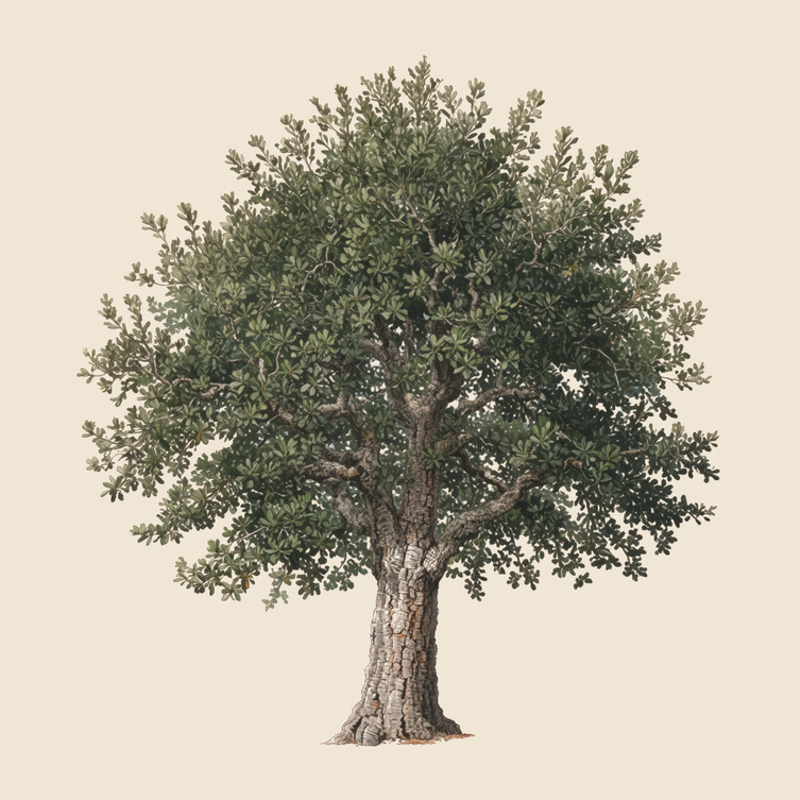
A true long-term anchor: slow, deep-rooted and built to outlive the line. Gives shade, acorns and harvestable cork, and asks little once established - plant it for the decades.
Cork oak in a syntropic line
Cork oak is an Emergent Climax tree that anchors long-term structure on acidic-to-neutral free-draining soils. Place production species (chestnut, olive, carob) in its partial shade and keep fast pioneers temporary — pollard or remove them once the oak and high canopy lock in.
Tolerances and growing conditions
- Strata
- Emergent
- Lifecycle
- Climax
- Soil preference
- Sandy, Loam, Rocky
- Soil pH range
- 4.8 – 7
- Min. temperature
- -10°C
- Min. rainfall
- 500 mm/year
- Wind tolerance
- High
- Frost tolerance
- Medium
- Growth rate
- Slow
- Irrigation needed
- Low
- Foliage
- Evergreen
- Waterlogging tolerance
- Low
- Origin
- Mediterranean
- Native to Portugal
- Yes
How to manage it
Prune to a high, clean trunk early on for future cork harvest (first strip at ~25 years, then every 9-12 years); avoid disturbing the root zone.
How to propagate
Sow acorns fresh in autumn; keep moist until they sprout.
Guidance, not a guarantee — success varies by species and skill.
What to watch out for
Very sensitive to root disturbance and waterlogging - avoid deep tilling or compacted/poorly-drained soil near the trunk; slow to reward, needs decades of patience.
Frequently asked questions about Cork oak
Is cork oak frost-hardy?
Yes for winter cold in many climates — generally hardy to around -10°C when dormant, with medium frost tolerance in the catalog. Flowering crops can still lose a season to late frost, so site them carefully.
What soil does cork oak need?
It does best on sandy, loam, rocky ground, at pH about 4.8–7.
How much water does cork oak need?
Plan for a rainfall floor around 500 mm/year, plus low irrigation once established.
Can cork oak handle wet or waterlogged soil?
Poorly — cork oak has low waterlogging tolerance, so keep it off winter-wet clay and standing water.
What should I watch out for with cork oak?
Very sensitive to root disturbance and waterlogging - avoid deep tilling or compacted/poorly-drained soil near the trunk; slow to reward, needs decades of patience.
Design your line to see how your land fits Cork oak.
Start designing your line →