Pyrenean oak
Quercus pyrenaica
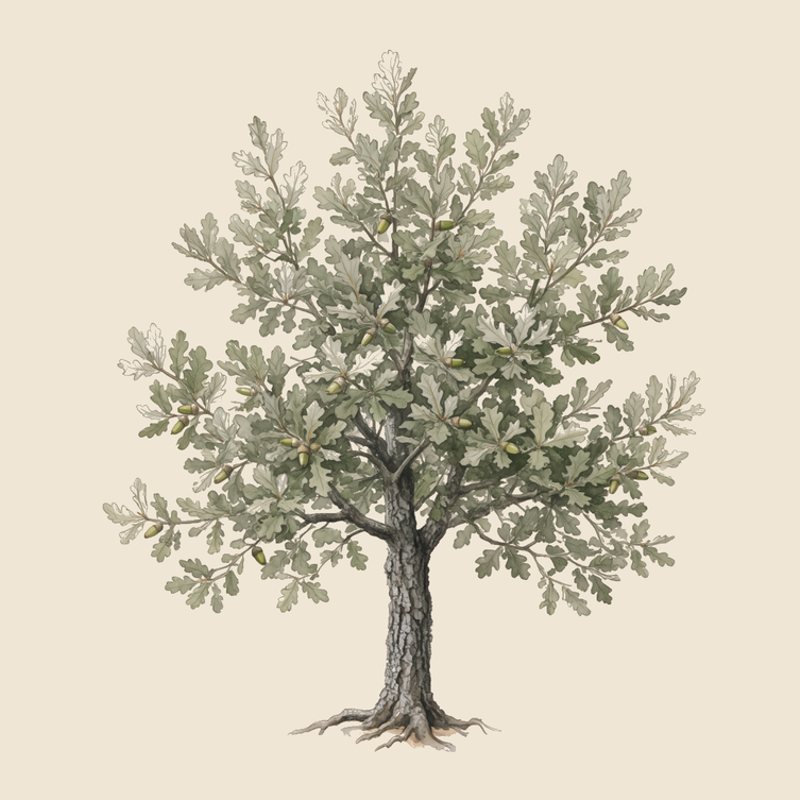
A hardy native oak that shrugs off dry summers and cold winters, anchoring the system for decades with acorns and durable timber. Slow and steady — patience required.
Pyrenean oak in a syntropic line
Pyrenean oak belongs in the Emergent layer as a Climax productive species. They frame the line. Rough in-row spacing starts around 5.4 m in a syntropic row. Good line partners include Leucaena, Tree medick. As a Climax species it is meant to stay for the long term — protect its light and root space as pioneers fade.
Tolerances and growing conditions
- Strata
- Emergent
- Lifecycle
- Climax
- Soil preference
- Loam, Rocky
- Soil pH range
- 4.5 – 6.5
- Min. temperature
- -20°C
- Min. rainfall
- 600 mm/year
- Wind tolerance
- High
- Frost tolerance
- High
- Growth rate
- Medium
- Irrigation needed
- Low
- Foliage
- Deciduous
- Waterlogging tolerance
- Medium
- Origin
- Iberia
- Native to Portugal
- Yes
How to manage it
Local oak species excellent at enduring dry summers and cold winters. Provides acorns for livestock and durable timber once mature; plant for the long term.
How to propagate
Soak acorns in water, discard floaters, stratify in moist sand over winter, then sow in spring.
Guidance, not a guarantee — success varies by species and skill.
What to watch out for
Grows slower than exotic biomass species and takes years to establish canopy — not a quick mulch source, but a long-term structural investment.
Frequently asked questions about Pyrenean oak
Is pyrenean oak frost-hardy?
Yes for winter cold in many climates — generally hardy to around -20°C when dormant, with high frost tolerance in the catalog. Flowering crops can still lose a season to late frost, so site them carefully.
What soil does pyrenean oak need?
It does best on loam, rocky ground, at pH about 4.5–6.5.
How much water does pyrenean oak need?
Plan for a rainfall floor around 600 mm/year, plus low irrigation once established.
Can pyrenean oak handle wet or waterlogged soil?
It has medium waterlogging tolerance — short winter wet is usually fine, standing water is not.
What should I watch out for with pyrenean oak?
Grows slower than exotic biomass species and takes years to establish canopy — not a quick mulch source, but a long-term structural investment.
Design your line to see how your land fits Pyrenean oak.
Start designing your line →