Damascus rose
Rosa damascena
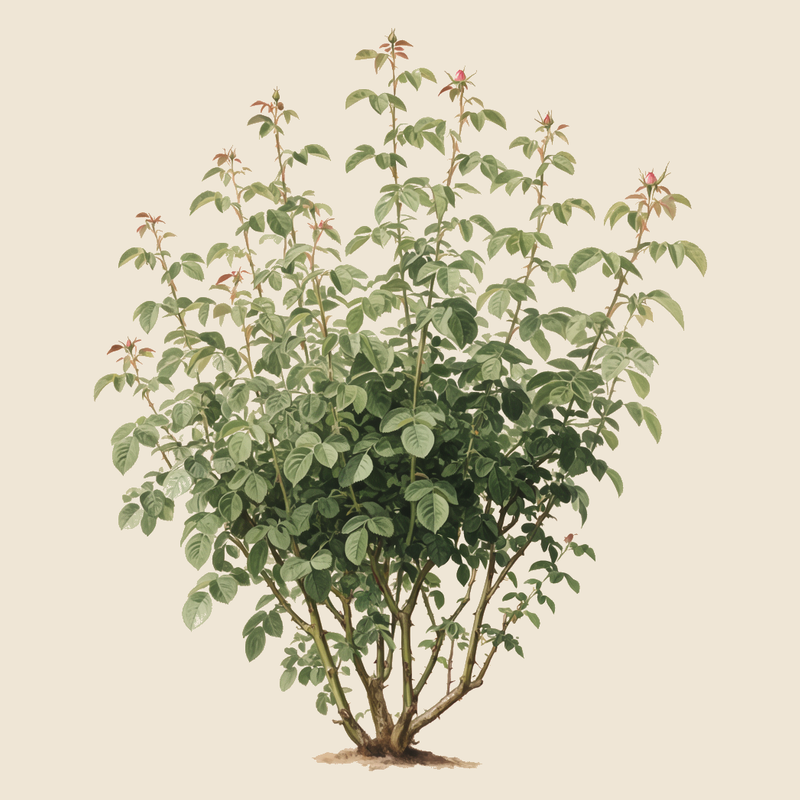
The classic Damask rose for perfume, rose water and fragrant petals — a thorny shrub-layer producer that thrives in Mediterranean summers with winter chill. Prune hard after bloom and keep air moving through the canopy.
Damascus rose in a syntropic line
Damascus rose belongs in the Shrub layer as a Secondary productive species. Support species, fruit, and nitrogen fixers under the canopy. Rough in-row spacing starts around 1.5 m in a syntropic row. Good line partners include Black locust, Blue-leaf wattle. As a Secondary species it carries mid-term yield and structure while climax trees slowly claim the canopy.
Tolerances and growing conditions
- Strata
- Shrub
- Lifecycle
- Secondary
- Soil preference
- Loam, Sandy
- Soil pH range
- 6 – 7.5
- Min. temperature
- -20°C
- Min. rainfall
- 450 mm/year
- Wind tolerance
- Medium
- Frost tolerance
- High
- Growth rate
- Medium
- Irrigation needed
- Medium
- Foliage
- Deciduous
- Waterlogging tolerance
- Medium
- Origin
- West Asia
- Native to Portugal
- No
How to manage it
Classic perfume and rose-water rose; hard-prune after flowering to renew flowering wood and keep the bush open for air. Harvest petals at dawn for the finest scent.
How to prune
In late winter cut out oldest, thickest canes at the base and remove dead or crossing wood to keep an open, airy vase shape. Shorten remaining canes by about a third to strong outward buds to encourage new flowering wood. Avoid heavy shearing of tips only, which leaves a woody, unproductive base over time.
How to propagate
Take hardwood cuttings in winter or softwood in summer; both root readily.
Guidance, not a guarantee — success varies by species and skill.
What to watch out for
Thorny and can sucker; needs winter chill for best bloom and hates waterlogged soils. Susceptible to black spot and rust in humid springs.
Frequently asked questions about Damascus rose
Is damascus rose frost-hardy?
Yes for winter cold in many climates — generally hardy to around -20°C when dormant, with high frost tolerance in the catalog. Flowering crops can still lose a season to late frost, so site them carefully.
What soil does damascus rose need?
It does best on loam, sandy ground, at pH about 6–7.5.
How much water does damascus rose need?
Plan for a rainfall floor around 450 mm/year, plus medium irrigation once established.
Can damascus rose handle wet or waterlogged soil?
It has medium waterlogging tolerance — short winter wet is usually fine, standing water is not.
What should I watch out for with damascus rose?
Thorny and can sucker; needs winter chill for best bloom and hates waterlogged soils. Susceptible to black spot and rust in humid springs.
Design your line to see how your land fits Damascus rose.
Start designing your line →