Kiwi
Actinidia deliciosa
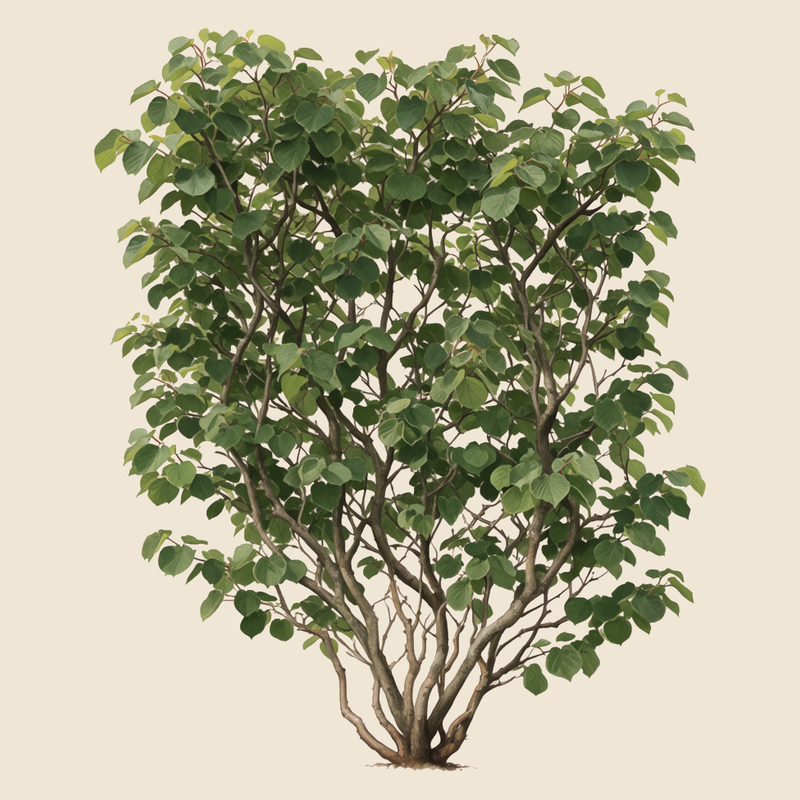
A vigorous fruiting vine for a strong frame — generous kiwi harvests once male and female plants (or a self-fertile type) are in place. Needs training, pruning and shelter from hard wind.
Kiwi in a syntropic line
Kiwi belongs in the Shrub layer as a Secondary productive species. Support species, fruit, and nitrogen fixers under the canopy. Rough in-row spacing starts around 2.8 m in a syntropic row. Good line partners include Black locust, Blue-leaf wattle. As a Secondary species it carries mid-term yield and structure while climax trees slowly claim the canopy.
Tolerances and growing conditions
- Strata
- Shrub
- Lifecycle
- Secondary
- Soil preference
- Loam, Sandy
- Soil pH range
- 5.5 – 7
- Min. temperature
- -15°C
- Min. rainfall
- 800 mm/year
- Wind tolerance
- Low
- Frost tolerance
- Medium
- Growth rate
- Fast
- Irrigation needed
- Medium
- Foliage
- Deciduous
- Waterlogging tolerance
- Low
- Origin
- China
- Native to Portugal
- No
How to manage it
Dioecious climbing vine — plant male and female (or a self-fertile cultivar) on a strong pergola or wire frame. Summer-prune rampant shoots and winter-prune to renew fruiting wood.
How to prune
Kiwi vines need firm winter renewal pruning: cut back last year's fruited canes to two or three buds and remove tangled, weak or crossing growth, keeping a permanent framework of main arms on the wire or pergola. Aim for an open fan structure that lets light reach renewal shoots. Avoid pruning in early spring when sap rises, as cuts bleed heavily.
How to propagate
Take softwood cuttings in summer or layer vigorous shoots; both establish readily.
Guidance, not a guarantee — success varies by species and skill.
What to watch out for
Needs a sturdy support structure and both sexes nearby unless self-fertile. Young shoots frost-tender in spring; wind shreds large leaves. Can smother neighbours if left untrained.
Frequently asked questions about Kiwi
Is kiwi frost-hardy?
Yes for winter cold in many climates — generally hardy to around -15°C when dormant, with medium frost tolerance in the catalog. Flowering crops can still lose a season to late frost, so site them carefully.
What soil does kiwi need?
It does best on loam, sandy ground, at pH about 5.5–7.
How much water does kiwi need?
Plan for a rainfall floor around 800 mm/year, plus medium irrigation once established.
Can kiwi handle wet or waterlogged soil?
Poorly — kiwi has low waterlogging tolerance, so keep it off winter-wet clay and standing water.
What should I watch out for with kiwi?
Needs a sturdy support structure and both sexes nearby unless self-fertile. Young shoots frost-tender in spring; wind shreds large leaves. Can smother neighbours if left untrained.
Design your line to see how your land fits Kiwi.
Start designing your line →