Pigeon pea
Cajanus cajan
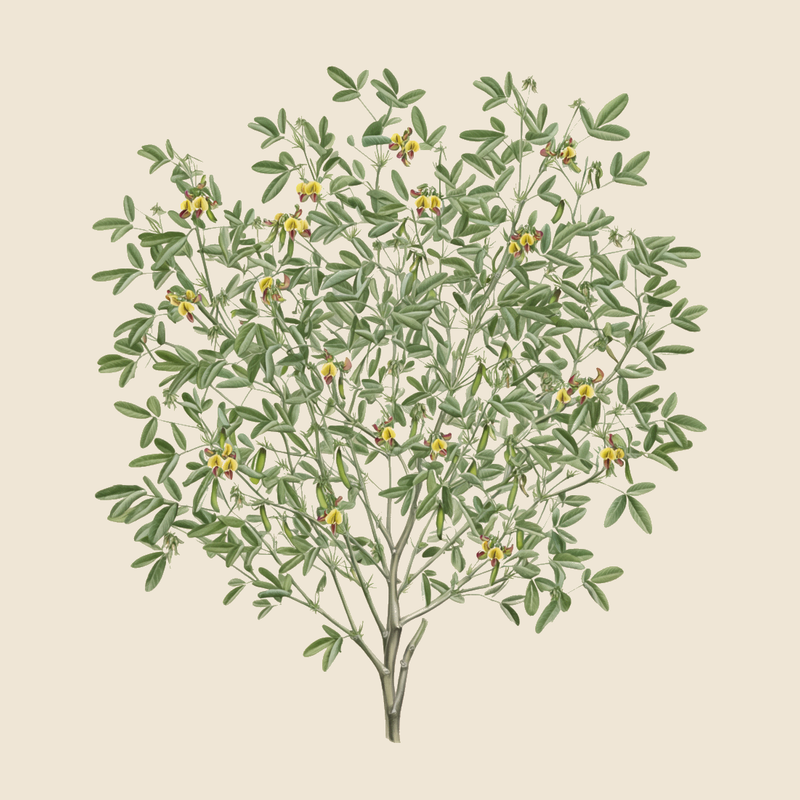
A fast nitrogen-fixing shrub that gives edible peas and quick chop-and-drop mulch while your trees establish. Short-lived and frost-tender — the perfect throwaway pioneer.
Pigeon pea in a syntropic line
Pigeon pea belongs in the Shrub layer as a Placenta nitrogen-fixing productive biomass species. Support species, fruit, and nitrogen fixers under the canopy. Rough in-row spacing starts around 0.7 m in a syntropic row. Good line partners include Russian olive, Almond. As a Placenta species it establishes fast, then gets cut back or phased out as longer-lived layers take over.
Tolerances and growing conditions
- Strata
- Shrub
- Lifecycle
- Placenta
- Soil preference
- Sandy, Loam
- Soil pH range
- 5 – 8
- Min. temperature
- -1°C
- Min. rainfall
- 500 mm/year
- Wind tolerance
- Medium
- Frost tolerance
- Low
- Growth rate
- Fast
- Irrigation needed
- Low
- Foliage
- Deciduous
- Waterlogging tolerance
- Medium
- Origin
- Asia
- Native to Portugal
- No
How to manage it
Short-lived nitrogen-fixing pioneer giving edible peas plus rapid chop-and-drop biomass while trees establish; cut back hard after each flush to keep it productive.
How to prune
This short-lived pioneer often dies back in frost; cut back hard to a low framework or ground level once frost damage shows, encouraging fresh multi-stem regrowth. Don't worry about shape, its job is fast biomass and early nitrogen cycling.
How to propagate
Soak seed 24 hours before sowing, or strike hardwood cuttings in warm season.
Guidance, not a guarantee — success varies by species and skill.
What to watch out for
Frost-tender (damaged below ~0°C, killed by hard frost) and short-lived (2-5 years); treat as a fast support/pioneer crop to be replaced over time.
Frequently asked questions about Pigeon pea
Is pigeon pea frost-hardy?
Yes for winter cold in many climates — generally hardy to around -1°C when dormant, with low frost tolerance in the catalog. Flowering crops can still lose a season to late frost, so site them carefully.
What soil does pigeon pea need?
It does best on sandy, loam ground, at pH about 5–8.
How much water does pigeon pea need?
Plan for a rainfall floor around 500 mm/year, plus low irrigation once established.
Can pigeon pea handle wet or waterlogged soil?
It has medium waterlogging tolerance — short winter wet is usually fine, standing water is not.
What should I watch out for with pigeon pea?
Frost-tender (damaged below ~0°C, killed by hard frost) and short-lived (2-5 years); treat as a fast support/pioneer crop to be replaced over time.
Pigeon pea in soil templates
Design your line to see how your land fits Pigeon pea.
Start designing your line →