Pomegranate
Punica granatum
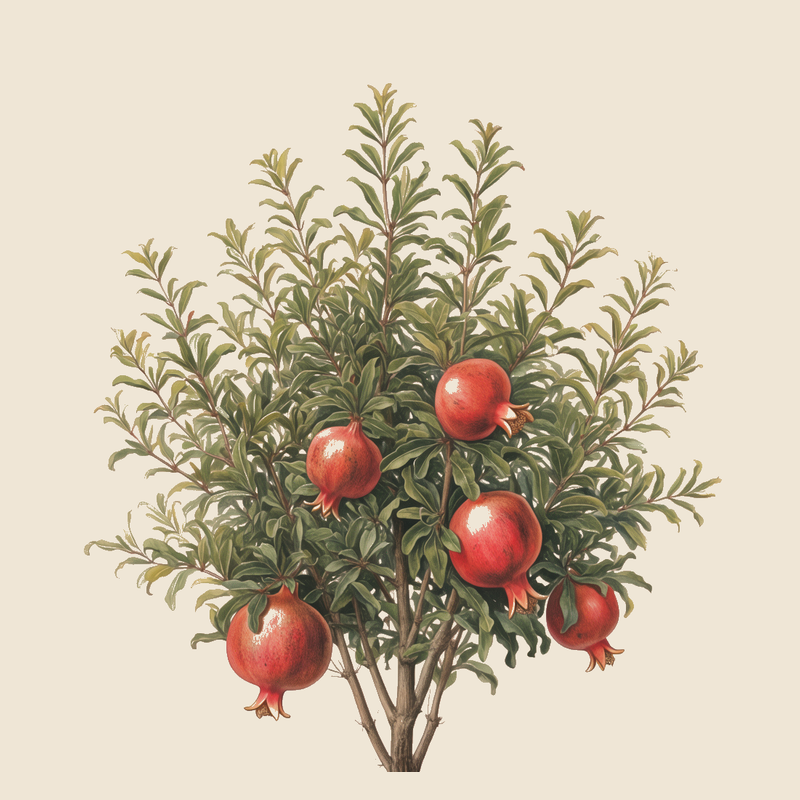
A tough, sun-loving fruiting shrub that shrugs off heat and drought once settled in. It just needs a long hot summer to ripen its jewel-packed fruit, and a firm hand to stop it suckering into a thicket.
Pomegranate in a syntropic line
Pomegranate is a Medium-layer Secondary producer for hot, well-drained lines. Tuck it under light emergent shade with tagasaste or tree medick as fertility partners; it fills the productive mid-storey while climax olives and carobs take the long game above.
Tolerances and growing conditions
- Strata
- Medium
- Lifecycle
- Secondary
- Soil preference
- Loam, Sandy, Rocky
- Soil pH range
- 5.5 – 8
- Min. temperature
- -12°C
- Min. rainfall
- 400 mm/year
- Wind tolerance
- Medium
- Frost tolerance
- Medium
- Growth rate
- Medium
- Irrigation needed
- Medium
- Foliage
- Deciduous
- Waterlogging tolerance
- Low
- Origin
- West Asia
- Native to Portugal
- No
How to manage it
Drought-hardy fruiting shrub/small tree; remove root suckers and open the centre for light and airflow to boost fruit set.
How to prune
Cut out root suckers and dead or crossing twigs, opening the centre of the multi-stem shrub so light reaches the fruiting wood. Keep 4-6 strong stems, remove weak inward growth, but don't over-thin since fruit forms on short spurs of older wood.
How to propagate
Take hardwood cuttings in winter or sow seed; seedlings fruit true and are vigorous.
Guidance, not a guarantee — success varies by species and skill.
What to watch out for
Needs a long hot summer to ripen fruit; irregular watering after fruit set can split the skins. Suckers freely from the base, so it can turn into a thicket if left unmanaged.
Frequently asked questions about Pomegranate
Is pomegranate frost-hardy?
Yes for winter cold in many climates — generally hardy to around -12°C when dormant, with medium frost tolerance in the catalog. Flowering crops can still lose a season to late frost, so site them carefully.
What soil does pomegranate need?
It does best on loam, sandy, rocky ground, at pH about 5.5–8.
How much water does pomegranate need?
Plan for a rainfall floor around 400 mm/year, plus medium irrigation once established.
Can pomegranate handle wet or waterlogged soil?
Poorly — pomegranate has low waterlogging tolerance, so keep it off winter-wet clay and standing water.
What should I watch out for with pomegranate?
Needs a long hot summer to ripen fruit; irregular watering after fruit set can split the skins. Suckers freely from the base, so it can turn into a thicket if left unmanaged.
Pomegranate in soil templates
Design your line to see how your land fits Pomegranate.
Start designing your line →