White mulberry
Morus alba
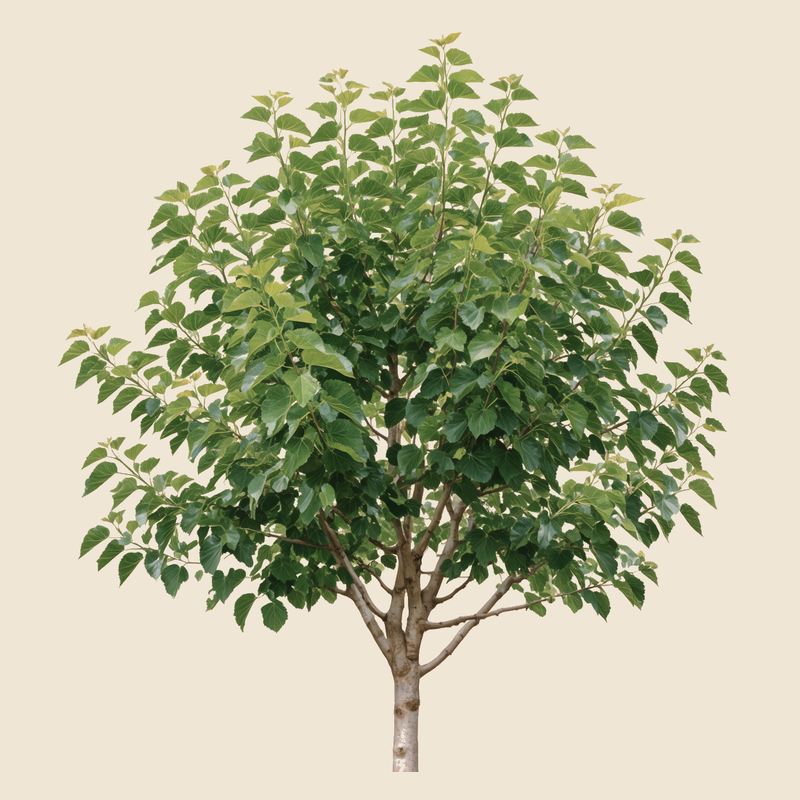
A fast, generous tree grown for fruit and leaf fodder — it pollards endlessly for mulch and animal feed. Vigorous to the point of weedy, so keep it cropped.
White mulberry in a syntropic line
White mulberry belongs in the High layer as a Secondary productive biomass species. Main production and shade trees for the line. Rough in-row spacing starts around 2.3 m in a syntropic row. Good line partners include Pigeon pea, Russian olive. As a Secondary species it carries mid-term yield and structure while climax trees slowly claim the canopy.
Tolerances and growing conditions
- Strata
- High
- Lifecycle
- Secondary
- Soil preference
- Loam, Sandy
- Soil pH range
- 5.5 – 7.5
- Min. temperature
- -25°C
- Min. rainfall
- 500 mm/year
- Wind tolerance
- Medium
- Frost tolerance
- High
- Growth rate
- Fast
- Irrigation needed
- Medium
- Foliage
- Deciduous
- Waterlogging tolerance
- Medium
- Origin
- China
- Native to Portugal
- No
How to manage it
Classic fodder and fruit pollard; tolerates repeated hard pollarding for leaf fodder and mulch.
How to prune
Cut back last year's growth hard to maintain a pollard head, removing crossing and inward shoots. Aim for a low, multi-branched crown for easy fodder harvest. Tolerates severe cuts well, so don't be timid with dormant wood.
How to propagate
Take dormant hardwood cuttings in winter — they root readily — or sow seed in spring.
Guidance, not a guarantee — success varies by species and skill.
What to watch out for
Self-seeds freely and is considered invasive in several regions; fruit stains surfaces. Hardy well below -20°C once established.
Frequently asked questions about White mulberry
Is white mulberry frost-hardy?
Yes for winter cold in many climates — generally hardy to around -25°C when dormant, with high frost tolerance in the catalog. Flowering crops can still lose a season to late frost, so site them carefully.
What soil does white mulberry need?
It does best on loam, sandy ground, at pH about 5.5–7.5.
How much water does white mulberry need?
Plan for a rainfall floor around 500 mm/year, plus medium irrigation once established.
Can white mulberry handle wet or waterlogged soil?
It has medium waterlogging tolerance — short winter wet is usually fine, standing water is not.
What should I watch out for with white mulberry?
Self-seeds freely and is considered invasive in several regions; fruit stains surfaces. Hardy well below -20°C once established.
White mulberry in soil templates
Design your line to see how your land fits White mulberry.
Start designing your line →